



This course is a core professional certificate program jointly offered by Stanford University’s Department of Chemical Engineering and SLAC National Accelerator Laboratory. It focuses on the most groundbreaking molecular and nanoscale technologies in the energy sector and is taught by a combination of leading researchers and seasoned industry entrepreneurs. The course spans the entire spectrum from basic scientific research and technology development to commercial implementation, systematically explaining the core principles and cutting-edge practices of renewable energy, and cultivating interdisciplinary professionals with both technical depth and industrial vision to support the global energy transition.
I. Course Overview
The course begins with a comprehensive overview of Stanford University’s energy research landscape, spanning the full spectrum from fundamental molecular science to policy and regulation. It highlights the core research directions of the Sustainable Energy Catalysis Center (SUNCAT) and emphasizes that major breakthroughs in future energy technologies will inevitably occur at the molecular and nanoscale.
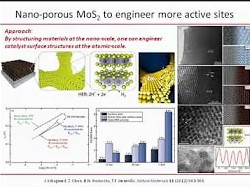
The core technology module provides an in-depth exploration of key molecular conversion applications in renewable energy, including solar fuel production, water electrolysis for hydrogen generation, fuel cells, and biofuel synthesis. It thoroughly dissects the underlying logic of catalyst design, demonstrating how earth-abundant materials—such as molybdenum disulfide nanowires and nanoporous platinum—can achieve catalytic performance rivaling that of precious metals through structural engineering. The course also focuses on analyzing cutting-edge advancements in the electrochemical conversion of carbon dioxide and water to produce fuels and chemicals. This technology enables high-density chemical storage of renewable energy, addressing the industry-wide challenge of the intermittent nature of wind and solar power generation.
Additionally, the course features a dedicated module on energy entrepreneurship and leadership. Entrepreneurs with 30 years of industry experience share insights on team management in deep-tech companies, dissecting the core role of technical leaders as "risk moderators" and clearly distinguishing between leadership and management skills to provide practical guidance for the commercialization of technological innovations. Finally, the course provides a systematic overview of the MEAT certificate program’s curriculum and learning pathways, covering core courses such as catalytic chemistry, molecular spectroscopy, and materials engineering.
II. Who Should Take This Course
This course is suitable for a diverse range of learners: First, it is designed for practicing engineers and R&D personnel in the energy, chemical, and materials industries who wish to update their knowledge base and master cutting-edge trends in molecular-level energy technologies. Second, it is ideal for undergraduate and graduate students in chemical engineering, materials science, environmental engineering, and related fields who want to align with industry demands early on and prepare for careers in the renewable energy sector. Third, entrepreneurs and investors in the energy sector who wish to gain a deep understanding of technical principles and R&D bottlenecks to accurately assess a project’s commercial value; it is also suitable for professionals in the traditional fossil fuel industry seeking a career transition to the clean energy sector; furthermore, energy policymakers and industry analysts can use this course to develop a comprehensive understanding of the relationship between basic research and industrial transformation.
III. What You Will Learn
Through this course, learners will first establish a comprehensive knowledge framework for energy molecular conversion, understand the core roles of catalysis, electrochemistry, and photochemistry in renewable energy, and master the fundamental approach to designing energy materials at the atomic level. Second, they will gain an in-depth understanding of the R&D progress, technical challenges, and industrialization prospects of key technologies such as solar fuels, fuel cells, and carbon dioxide reduction, enabling them to recognize the practical application value of cutting-edge research findings. At the same time, the course will cultivate learners’ mindset for technology commercialization, equipping them with methods for team building and leadership in deep-tech enterprises, and helping them avoid common risks in the entrepreneurial process. Additionally, learners will gain an understanding of the application of core characterization techniques, such as molecular spectroscopy, in energy research, and acquire the professional ability to interpret scientific data and evaluate technical performance. Ultimately, they will develop a holistic perspective spanning from breakthroughs in basic science to industrial-scale applications, enabling them to seize the core opportunities of the global energy transition.